8 Days Lemosho Route
An extended Lemosho itinerary allowing additional acclimatization time.
This climbing program follows the established camp or hut sequence for the selected Kilimanjaro route. Daily walking times and distances are approximate because pace, weather, trail conditions and acclimatization affect each trekking day. Mountain guides monitor the group throughout the climb and may adjust timing for safety.
Main Areas on This Tour
This route is arranged to keep the program practical while allowing useful time in the principal places listed below. The final order can change when seasonal conditions, accommodation location, park access or flight times require an adjustment.
- Mount Kilimanjaro
Highlights Along the Route
These are the principal areas connected to this itinerary. The exact wildlife, weather and local conditions are different on every departure.

Mount Kilimanjaro
An extended Lemosho itinerary allowing additional acclimatization time.
Detailed Daily Program
Open each day for the full description. The program below is based on the tour material supplied for this website; final lodge names, operating times and any optional activities are confirmed with the quotation.
You will be picked up at the Kilimanjaro International Airport and transferred to your hotel in Moshi town; you will meet your guide who will brief you on your upcoming trek and do an equipment check to make sure you have all the necessary mountain gear. The missing gear can be rented on this day.
Experience & Practical Details
Walking time is approximate and depends on group pace, weather, trail conditions and altitude response.
Guides control the pace, rest stops and daily mountain routine with acclimatization and safety in mind.

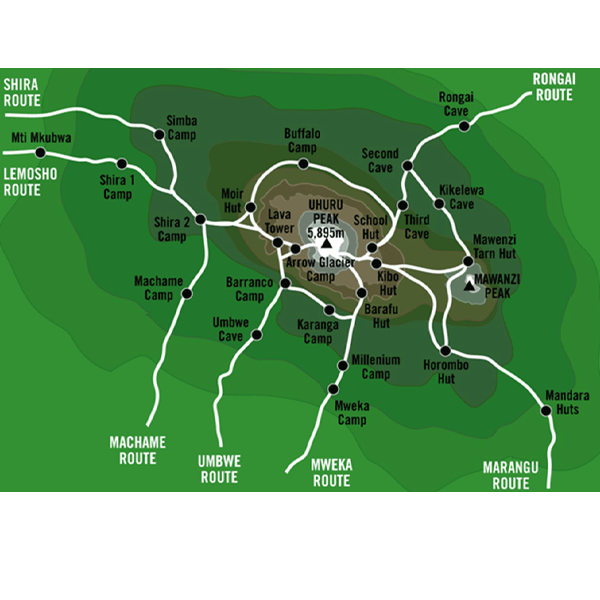
After breakfast and briefing, drive to Londorossi Park Gate, about a 3-hour trip. From here, a forest track requiring a 4WD vehicle leads to Lemosho Glades (2390 m) where you will start your trek through the rainforest. Walk along forest trails to Mti Mkubwa campsite (2750 m).
Trekking Time: 3 hours | Distance: 7 km | Altitude Gain: 360 m
Experience & Practical Details
Lemosho begins on the western side of Kilimanjaro and normally crosses the Shira Plateau before joining the southern circuit.
Its longer approach allows gradual altitude gain before the upper mountain stages.
After breakfast, we continue as the trail’s steepness gradually increases and enters the giant heather moorland zone. After several streams are crossed we continue over the Shira Ridge then gently downwards to Shira 1 camp (3505 m) located by a stream on the Shira Plateau. Trekking Time: 6-7 hours | Distance: 10 km | Altitude Gain: 755 m
Experience & Practical Details
Shira approaches from the western highlands and reaches the Shira Plateau early in the program.
The starting altitude is relatively high, so previous acclimatization and careful pacing are important considerations.
A gentle hike across the plateau leads to Shira 2 camp (3810 m) on moorland meadows by a stream. A variety of short hikes are available on the Plateau, making this a good acclimatization day. TrekkingTime: 3-4 hours | Distance: 8 km | Altitude Gain: 305 m
Experience & Practical Details
Shira approaches from the western highlands and reaches the Shira Plateau early in the program.
The starting altitude is relatively high, so previous acclimatization and careful pacing are important considerations.
From the Shira Plateau, we continue to the east, passing the junction near the peak of Kibo. As we continue, our direction changes to the South East towards the Lava Tower, called the “Shark’s Tooth.” Shortly after the tower, we come to the second junction, which brings us up to the Arrow Glacier (4876 m). We now continue down to the Barranco Hut (3860 m).
Although you end the day at the same elevation as when you began, this is another important day for acclimatization. TrekkingTime: 6-7 hours | Distance: 10 km | Altitude Gain: 50 m
Experience & Practical Details
Shira approaches from the western highlands and reaches the Shira Plateau early in the program.
The starting altitude is relatively high, so previous acclimatization and careful pacing are important considerations.
Barranco is an important acclimatization area on Kilimanjaro’s southern circuit.
The Barranco Wall is a steep hiking section that is completed on foot with guide support; it is not a technical rock climb on the standard route.
We start the day by descending into the start of the Great Barranco, a huge ravine. We then exit steeply, up what has been termed the Breakfast Wall. It is a climb over rocks, not technical but long and tiring.
Passing underneath the Heim and Kersten glaciers, we head towards the Karanga Valley (4000 m) overnight. Trekking Time: 3-4 hours | Distance: 6 km | Altitude Gain: 140 m
Experience & Practical Details
Barranco is an important acclimatization area on Kilimanjaro’s southern circuit.
The Barranco Wall is a steep hiking section that is completed on foot with guide support; it is not a technical rock climb on the standard route.
After a good night’s rest and breakfast, we set off on our walk to Barafu camp at 4640m. The climb will take us across desolate scree slopes with no vegetation around us at all. It’s a tough steep walk made more difficult by the altitude.
On arriving at camp we eat and spend the afternoon resting as we prepare for a long night and day ahead. It is important to keep hydrated and warm. We have an early dinner and then try to get some sleep as we will be getting up between 11 pm and 12 pm to start the climb to the summit.
Experience & Practical Details
Barafu is the main high camp used before summit attempts on several southern Kilimanjaro routes.
Rest, hydration, equipment preparation and an early night are important before the summit departure.
You will be awoken around 23:30 with hot tea and biscuits. Hopefully, you have managed to get a few hours sleep; don’t worry if you haven’t as most people struggle to sleep before summit night. Do however make sure that all your kit, including warm clothes, headlamp, insulated water reserves, and snacks are ready for a sharp departure at 24:00.
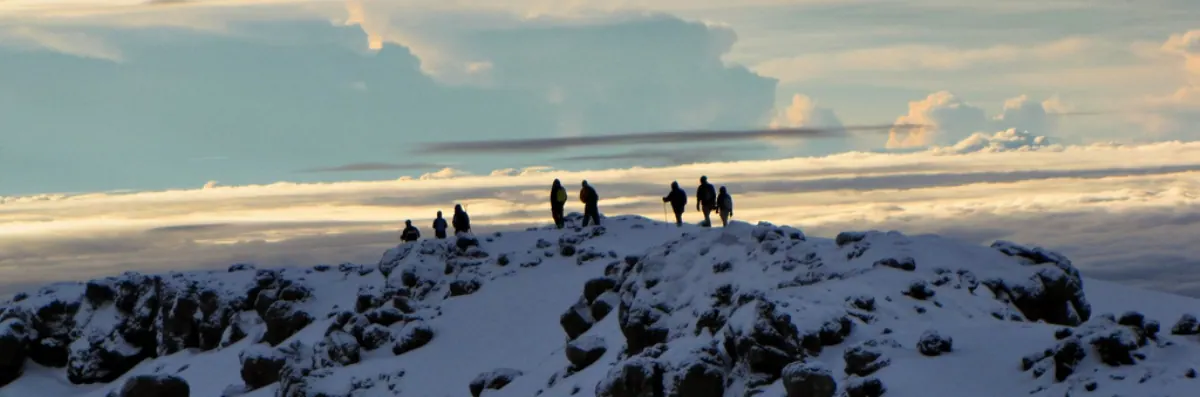
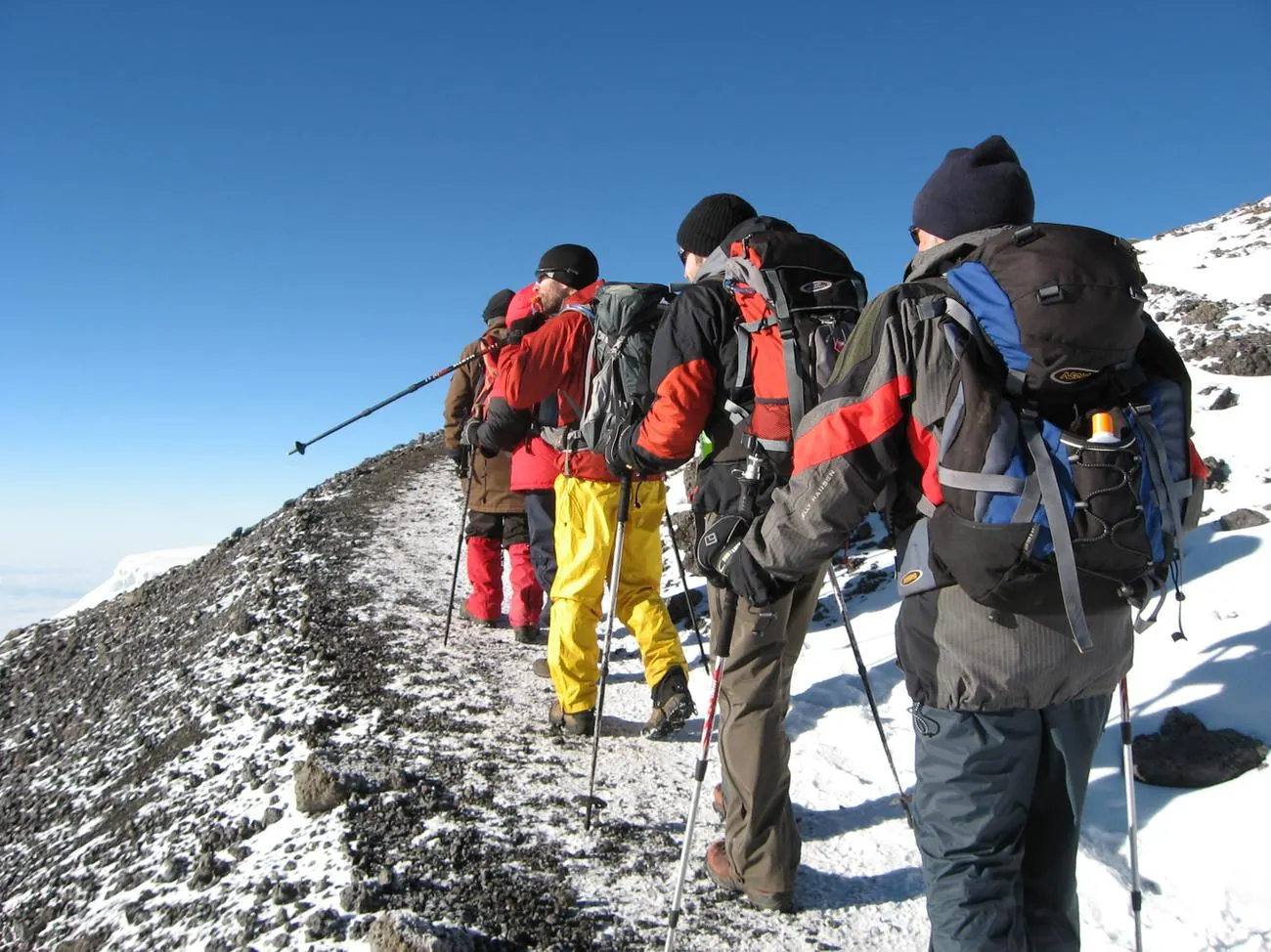
The trek up Kibo is steep and slow. The trick is to keep your momentum moving forward, one step at a time. It takes about 6-8 hours to reach the top of the crater rim where you will see the sign for Stella Point (5,739 meters).
You still have another 156 meters of altitude to walk around the crater rim to Uhuru Peak (5,895 meters). After reaching the summit of Kilimanjaro, a 4.5km / 3-mile ascent, you still have an 11km / 7-mile descent to Mweka Camp (3,100 meters)! Mweka is situated in the upper part of the rainforest zone.
The richness of oxygen and moisture in the air will be a very welcome surprise.
Experience & Practical Details
Barafu is the main high camp used before summit attempts on several southern Kilimanjaro routes.
Rest, hydration, equipment preparation and an early night are important before the summit departure.
Uhuru Peak is the highest point on Mount Kilimanjaro at 5,895 metres above sea level.
Summit timing depends on pace, weather, trail conditions and each climber’s response to altitude.
In the morning after breakfast, you will be trekking down to Mweka gate. The trek is a pleasant one through the lower rain-forested slopes and down to Mweka Gate (1,640 meters). Although you cover 9km / 5.5 miles, the trek only takes 3-4 hours.
Assuming you successfully reach Stella Point or Uhuru Peak you will be presented with official certificates – a green certificate for the former and a gold certificate for the latter. It is customary to tip your trekking crew before being transported back to your hotel in Arusha. The end of 8 Days Lemosho Route
Experience & Practical Details
Lemosho begins on the western side of Kilimanjaro and normally crosses the Shira Plateau before joining the southern circuit.
Its longer approach allows gradual altitude gain before the upper mountain stages.
Uhuru Peak is the highest point on Mount Kilimanjaro at 5,895 metres above sea level.
Summit timing depends on pace, weather, trail conditions and each climber’s response to altitude.
What Is Normally Included
- Professional guiding for the confirmed tour
- Transport and transfers specifically shown in the final itinerary
- Accommodation and meals specifically listed in the quotation
- National park, conservation or activity fees specifically listed in the quotation
- Drinking water during the operating tour where stated
- Government taxes applicable to the included services where stated
What Is Normally Excluded
- International flights and Tanzania visa costs
- Travel insurance and personal medical expenses
- Tips and gratuities
- Personal equipment, laundry and beverages unless included
- Optional activities not shown in the final quotation
- Any service not specifically listed under inclusions
Tour Images
Frequently Asked Questions
Request This Tour
Send your preferred dates, number of travelers, accommodation level and any additions you want. Ruhala will reply with availability and a detailed quotation.

 WhatsApp